
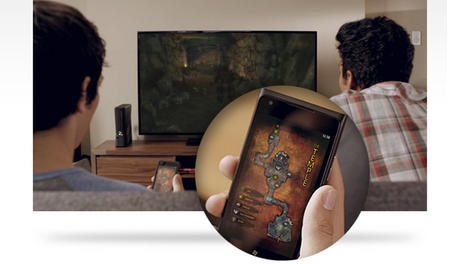
Image from techworld24.com
I don’t have a lot in common with Francis Underwood. He is the majority whip for the Democrats; I am an English major. He is known for aggressive politics and cunning stratagems; in Tic-Tac-Toe, I am known for giving up victories in the name of preserving the symmetry of the board. He is a fictional character played masterfully by Kevin Spacey; I am a nonfictional character played with passing competence by myself.
But there is one thing that Mr. Underwood and I have in common: we both play videogames.
I became increasingly acquainted with Francis Underwood and the rest of the characters in Netflix’s House of Cards over the course of a few days following a surgical operation. Nothing major—just the pulling of two impacted wisdom teeth that were left in place longer than any measure of wisdom would allow. But the combination of the pain and the painkillers left me unable to focus on my work, and on my usual distractions. Focusing on any one thing, in fact, was pretty much beyond me. I needed something to do, but any one thing seemed to little. So while I was watching Spacey deliver soliloquys to the audience from my laptop screen, I was also glancing to the TV screen on my left, where I was guiding engineer Isaac Clarke through a monster-infested space station in Dead Space . In my drug-induced haze, I felt a strong bond with Francis Underwood—not only did we both play videogames, but we were playing them at the same time.
While the intensity of this play-viewing (compressing a season of television and a playthrough of Dead Space into a handful of days) was unusual for me, the combination was not. As such, I would like to call for a new entry into the gamer profile series, one that encompasses such a playing style: my name is Michael Hancock, and I am a split-screener.
By split-screener, I don’t mean that I play games that divide the screen into portions, ala Mario Kart . What I mean is that when playing a game, I’m rarely just looking at the screen in front of me—usually, my attention is on some other screen at the same time, and I flit back and forth between the two. And I can offer many examples beyond just the House of Cards and Dead Space pairing. I went through Battlestar Galactica while playing Elder Scrolls: Oblivion . I fought through the mind-warping storyline of Nier while watching the time-warping storylines of Being Erica. I even double-downed on my game screens and switched back and forth between Etrian Odyssey and Persona 3 ; the advantage of a turn-based RPG is that you can put it down between turns to do something else, even if that something else is another turn-based RPG.

It should be noted here that when I say screen, I’m taking it not as a physical screen, but screen in the sense of partition, a division of attention. Split-screening isn’t just dividing attention between two different physicals screens—sometimes, it’s dividing attention among different media in general. Take books and games; I read Holly Luhning’s Quiver while playing through 999: Nine Hours, Nine Persons, Nine Doors , and the violent horrors of both fed into each other in a very satisfying, complementary manner. (More complementary, than, say, Nier and Being Erica ) In another literary DS pairing, the harsh, sacrifice-based mechanics of Valkyrie Profile: Plume of the Covenenant reinforced the harsh, callous tone of Camus’ The Plague . When VP proved too hard for me, I gave up on The Plague too; it felt too far off the rhythm I’d started to keep going on one without the other.
Here’s a split-screening pair that I imagine is familiar to a lot of people, to the point where we stop thinking of it as a split at all: games and music. Microsoft realized that people want to determine their own soundtrack fairly early off, which is why the Xbox 360 allows you replace the game’s music with songs of your own choice. For me, that choice is an eclectic mix. Some rather questionable tastes, in music and games both, have led to some bizarre, but unalienable associations. The last dungeon of Grandia will always be associated with Vertical Horizon’s “Everything You Want.” Nelly Furtado’s “I Am Like a Bird” is matched with the forest fight in Final Fantasy Tactics. God help me, I’ll never be able to think of Crashed Warped without tying it in with No Doubt’s discography, and vice versa.
I probably take split-screening to an extreme, but I bet it’s more common than people would think. One of my former roommates had a routine: he’d come home from work, fire up the television with a show he was catching up on, and play a few rounds of Angry Birds . When I went home for Christmas, I saw my brother and his fiancee—both of whom would very strongly self-identify as non-gamers—play rounds and rounds of Words with Friends while winding down with a few episodes of Storage Wars. For a larger scale example, it could be argued that the Nintendo WiiU is a system made for the social split-screener, dividing attention between the big screen and the the touch screen. It’s like playing a mobile game, with all your friends around! I’ve seen people stop in mid-conversation, pull out their phones, and point it at the nearest person: What do you think that is, they demand, thus Draw Something making an appearance at the bar scene. We put our games into places that fit into our lives. With the increased prevalence of social games and mobile games, and in general, games that are designed to be played in short, sharp bursts, we are all turning into split-screeners.
The question is whether this is a good thing, and what split-screening means for the future of gaming and society at large. It’s easy to argue the con-side, that split-screeners engage everything on a more shallow level, so intent in maximizing their time that the true meaning—for whatever given value you want to assign to “true”–is buried in dissonant noise. Under this argument, the split-screener is the one who always selects “Maybe” on the great Facebook list of life’s events, a person so afraid to commit to one experience that they miss out on a little bit of everything. One response to this accusation is that no one is just a split-screener; we all have activities we place greater value on than others, and we respond as we see fit. Sometimes you want to sit down and read a book, sometimes you want to play a game, and sometimes, you want to do both; different entertainments afford themselves to different modes of engagements, and one does not preclude the value of another.
A better response, though, is that the split-screener, far from receiving a lesser gaming experience, embodies a greater truth: no man is an island, and no one games in a vacuum. When we play, we bring our cultural tropes with us, evaluating the game through the story forms we’re familiar with, the mechanics we understand. We bring our reasons for playing, whether that’s escapism, desire for dominance, connecting with friends, or a plethora of other possibilities. We bring our politics, our social values, our ideologies. In short, we bring ourselves. The split-screener, by visibly showing attention being divided among different mediums, demonstrates that our attention is always divided, always split between the game at hand, and our lives everywhere else. No one who plays games is just a gamer, and the split-screener—whether they’re an English student or a majority whip–knows that better than most.
My name is Michael Hancock. I’m a split-screener. Are you?
