
by Joe Hilgard
Don’t miss Part One of this article!
Competence
I also feel like most big-budget single-player games are not very good about providing opportunities for the player to exercise competence. When gameplay mechanics are simple, or challenges too easy, there’s no thrill in victory. The player cannot feel triumphant or skilled for winning, because victory was given to him/her on a plate.
Today’s massive AAA titles sometimes seem hung up on being “experiences” rather than games. As a result, many games don’t seem to have much meat to their mechanics and dynamics. Developers also seem afraid to frustrate or scare away players with defeat, so games are generally easier and do more to guide the player to victory, rather than letting the player figure it out on his or her own. Rather than being “easy to learn, difficult to master,” these games are “easy to learn, easy to master.” By the end of the first stage or two, the player already knows everything necessary to skate to the end of the game. It’s just a matter of time to slog towards the end, usually more to see the conclusion of the story than to test yourself as a player.
I often feel like I’m in the minority, grumbling at these games while others still manage to feel competency by playing them. It’s possible that stories or fantasies might be able to provide feelings of competence for some, as players could be experiencing competence vicariously as they role-play a strong character like Shepard or Marcus Fenix. This feels cheap to me, though, like idly engaging in power fantasy instead of exposing oneself to genuine triumph and defeat.
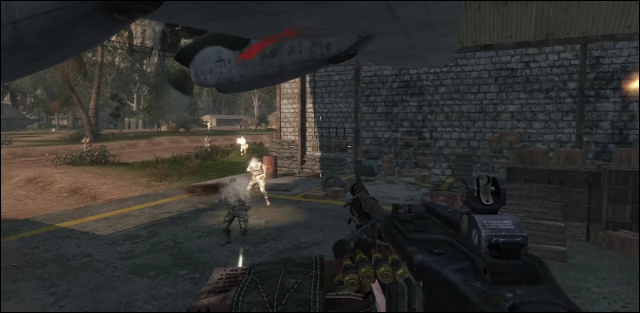
Yeah, yeah, you’re a big man behind that turret, aren’t you?
Challenge might not be necessary either. Many players seem to get feelings of competence just from shooting something or watching those RPG numbers go up, regardless of challenge. Competence is theoretically driven by “setting goals and meeting them,” but it’s possible that those goals don’t have to be particularly challenging to be rewarding.
Maybe it’s that challenge makes for bigger variations in feelings of competence, experiencing higher highs and lower lows as we struggle between triumph and frustration. If this is the case, maybe easy games are blandly comfortable, like a sitcom in its twelfth season, something marginally interesting and relaxing but unlikely to provide a peak experience. This will appeal to many, but the experienced and daring will want something more challenging.
Relatedness
If there’s one thing that games are doing well, it’s the capacity for relatedness. Online games are more robust and popular than ever. Never has it been easier to play in pairs and in larger groups, both with and against each other. Developers should keep in mind that it should be easy for players to find and play with their particular friends, however – it’s frustrating when you can only play with strangers, or when a game with online multiplayer also fails to allow for local multiplayer. The proliferation of internet discussion forums also seems important – games are more fun when you and your friends can talk about them together! Relatedness motives might be part of why we seem to have no self-control about buying games. We need to buy the game a week before it comes out so that we can play it the second it’s released for fear that we miss out on discussion or find that the multiplayer community has moved on.
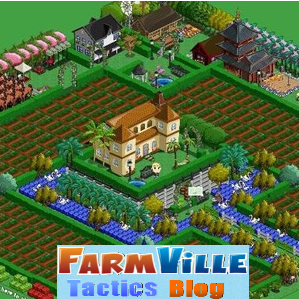
Are people still afraid that Farmville is the new game to beat? Maybe it’s easier to provide feelings of autonomy, competence, and relatedness than we thought.
In summary, Self-Determination theory suggests that people play games to satisfy their psychological needs for autonomy, competence, and relatedness, and that players will enjoy a particular game to the extent that it provides for those needs. However, people are probably very different from each other in whether a game will ultimately suit their needs.
There are still many things about games which we enjoy that may not necessarily relate to the satisfaction of Self-Determination Theory needs. For example, many players seem to enjoy games for their stories, but I’m not so sure how that might provide feelings of need satisfaction. (There are other theories, though, which might be covered in a future article.) There also are plenty of wildly popular “no-challenge” games like Farmville, which wouldn’t seem to provide feelings of competence or relatedness (spamming your friends with requests for energy isn’t exactly quality time together). In the meantime, I have to keep thinking about Przybylski’s study and wonder: why does the same game meet some players’ needs and fail to meet other players’ needs?
