
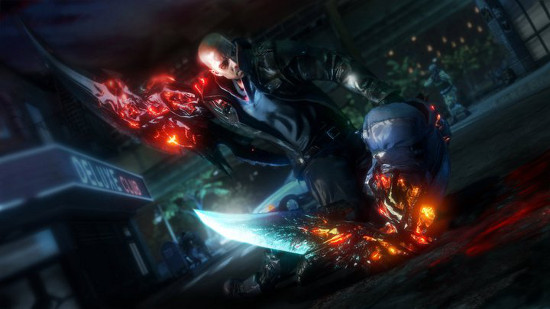
Recently, Medium Difficulty EiC Karl Parkenings and I had an interesting experience that I have to recommend to all of you: we got to play a game with a person who helped to make it. The game, in this case, was Prototype 2, developed by Radical Entertainment and published by Activision. Our contact at Radical was Kristal Plain, who worked as a lighting artist there. It was fantastic to be able to play through a game with someone who could tell us anecdotally how much work went in to creating a particular setting, which segments were headaches to finish, and which elements she was particularly proud of.
Kristal’s work, and the work of her colleagues at Radical, shines – literally; every reflective surface, every piece of volumetric lighting, contributes to the fact that Prototype 2 is something of a technical marvel. It is one of the best looking sandbox games I have ever seen, and it runs smoothly, plays well (the movement in particular is a joy), and offers what looks like a fully formed city to run around. It was interesting, and instructive, to see someone’s satisfied pride at the way that bloodstains shone in the sun.
Having a more material sense of the amount of effort that went into this game opened up some questions, however. It was obvious that an incredible amount of work, skill, and talent were involved in the making of Prototype 2; but as we worked our way through the narrative of the game, I kept asking: who is this game for?
What I mean specifically is that I couldn’t figure out who the game was marketed towards in particular, what image Radical and Activision had of the people who would play this game. The following is therefore an attempt to forensically recreate this image, like reassembling the shattered pulp of one of the many unfortunate bystanders in this game.
Quarantine: Isolating the Virus
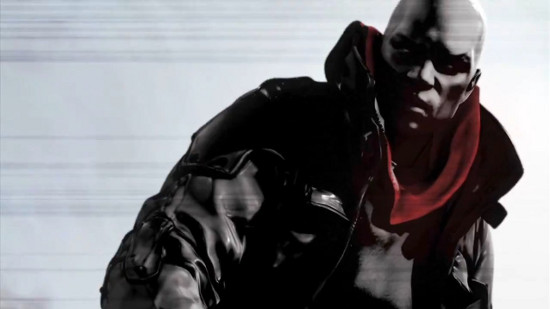
I began with the protagonist, James Heller. Heller, we are informed, is ex-army, and suffering from PTSD. The symptoms of his disorder are, in sum, obsessively wanting to murder the protagonist of the first game, Alex Mercer, who killed his wife and daughter. He expresses this desire by fidgeting with a gigantic knife before stabbing Mercer, who infects him with the virus that will give him superpowers.
Heller is hulking and black where Mercer was lithe and white, and signifies a more macho image of masculinity than his predecessor – was this to allow scenes of these two characters stabbing each other repeatedly not to fall into the Freudian trap that, say, the Raiden/Vamp fights in Metal Gear Solid embraced? As well, Heller’s status as a soldier (with PTSD and everything!) suggests a faint politics that is difficult to pinpoint – is he meant to be a hero for the “support our troops” set? Or a tragic figure for those critical of US military efforts? In a vague, ineffectual way, he could be both.
What Heller undeniably is, however, is an idiot. I doubt it will count as spoilers to say that Heller is duped over and over again, trusting everyone he meets who tells him “you should trust me!” only to find out they have lied to him after performing all of the tasks they give him.
Dumb videogame characters are not new; it’s a trope that many of us accept with a shrug and a sigh. However, Prototype 2 makes this characterization more prominent by presenting a potent brand of anti-intellectualization. Intelligence, as a human quality, is largely presented as a brand of pretension and snobbishness, a false virtue. Everyone who “tricks” Heller ( and “trick” here is a little like convincing a child that when you put your hands over your face, you’ve disappeared) winds up dead, eviscerated and assimilated in an act of revenge. Heller’s victories seem to suggest “if you’re so smart, then why are you dead?”
Not a bad question, really.
Ultimately, the speaking characters of Prototype 2 fall into two camps: “jocks” and “nerds,” with one outlying exception, “woman” (note the singular noun). This makes some degree of sense, as the events of the game revolve around scientists and the military. However, these “characters” are presented as either whining, superior nerds who boast about their intelligence while being gutted, or psychopathic lunkheads who prey on the weak (the scientists) and get their just desserts. In essence, they typify a more aggressive take on the dynamics of an 80s high school movie.
Neither group come off particularly well, although I took the sniveling depiction of the scientists to be particularly offensive. This ambiguity made me wonder: was the audience of the game imagined by its creators jocks, or nerds? If the former, then the whole thing can be read as a Darwinian power fantasy where “strength,” and only (physical) strength, is a guarantor of one’s advancement in the word: might makes right, and “heroes” are “the strong.” If they imagined nerds as their audience, then the whole thing reads as the fulfillment of a desire to become the tormentor, to briefly escape the role of the victim and indulge in a fantasy of being the victimizer. I suppose either makes sense.
But what if the actual audience of the game isn’t just jocks and nerds? What’s in it for them?
Contagion: Viral Replication
And this is what I find so baffling about Prototype 2: despite the incredible amount of skill and talent dedicated to making the game, we find a narrative that is determined to reinforcing cultural stereotypes that were outdated 10 years ago.
One can’t help but think that the producers of the game are shadowboxing with their consumers, trying desperately to imagine what they want. Popped collars and hoodies are cool right? What if we had both? In leather? Tribal tattoos appeal to a wide audience, right? Is masculinity still defined as big, dumb, brooding and violent? It is, right? And it’s still threatened by femininity?
Is that still en courant ?
And that, perhaps, is the source of the complaints emerging from E3 and the games industry in general: there is a profound disconnect between the image producers have of an audience, and the people who comprise that audience. “Jocks and nerds” hasn’t been the division in some time, at least for most of us. Women don’t necessarily like ponies and pink. Sex doesn’t need to be obscured by a thin veil of violence to be made palatable. Most of us (thank god), have grown up.
And yet, these are the images of ourselves that we see reflected back – not because that’s who we are, but because that’s the best guess people have of us, given “the numbers” to this point: statistics from an adolescence of yesteryear, reflecting all those fears and insecurities and those awful, embarrassing ideas of what looks cool (flames on sleeves, a brooding countenance, sunglasses at night). What we’re seeing are grownups presenting some distorted memory of what it was like to be a teenager, in order to sell to… who?
And if the answer is “teenagers,” then we arrive at the meat of why critics complained about the violence at E3 this year: we’re dumping these old, used up images on actual teenagers, those who might be fooled into thinking there’s something real there. And if teenagers aren’t the primary demographic, then why are we thinking in these terms at all?
That’s why it bothers me: I like Prototype 2. It’s a hell of a lot of fun to play. But it feels so strange to see these images and feel as if the game is telling me “see? This is what you like!” – because I don’t, and I haven’t for over ten years. And even then, I wonder if I wasn’t just responding to the fears of an older generation, telling me that it was weird to like comic books and read fantasy novels, making my interests seem strange and wrong – and, if we extend this narrative further back, that’s because that’s what they remember when they were hassled for reading Ray Bradbury.
This narrative is specious, and a little forced, but it’s the only way I can understand how producers think of their audiences. And it’s a shame – Kristal and her coworkers put together a great game, but I can’t help but feel that it’s a case of bleeding-age tech constrained by antiquated cultural representations.
Like a nerd suspended over a toilet bowl, about to receive a swirly.
Further Reading: Heart of Darkness: E3, Violence, and Context for Outrage (Medium Difficulty)

