
Walter Garrett Mitchell
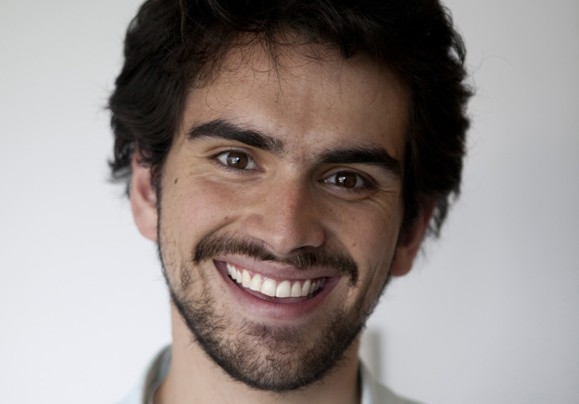
On Saturday, June 30 th , in the chic Condesa district of Mexico City, Armando Montano was found dead in an elevator shaft.
22 years old, Armando – “Mando,” to his friends – was working as a news intern for The Associated Press ( broken link – alternate ). The summer position was a stepping stone between a productive winter internship at the New York Times and the Master’s in Journalism he was soon to pursue at the University of Barcelona.
The circumstances of Mando’s death were gruesome – his potential coldly muted in what seems to have been no accident – but it was made all the more tragic by the countless fruits of his sunny personality. Mando’s energy, empathy, and drive had earned him a massive group of friends and admirers – a group too suddenly wearing black, a bent and winded group of which I am a member.
Mando was one of my closest childhood friends, but unfortunately for me, I didn’t know him as the tenacious, humane reporter with “potential [that] was truly limitless.” (So said Richard Berke, assistant managing editor at the Times.) Nor did I know him as the outspoken member of the National Association of Gay and Lesbian Journalists who once interviewed as Metro Weekly’s Coverboy. No – in my little narrow way, I knew him as Oddjob.
1997: the release of Goldeneye 64. I’m seven years old, in the first grade with Mando. He’s relentlessly funny; I’m a little serious. I’m straw-blond with a concerned brow; he’s dark and curly-haired with the deep laughing eyes he had even then. We find the word “f-ck” written on the bathroom stall of our Evangelical grade school. The word is empty of meaning but sharp with some mysterious primal force –we toss it back and forth, test its heft until the art teacher sends us to the principal’s. He’s still laughing; I’m upset.
We start playing Nintendo 64 at his house nearly every weekend. He’s a creative and impulsive player, a player in the playful sense. I’m the diligent, methodical type, the sort that will someday pore over Diablo stat sheets, Warhammer 40K rulebooks. Mando was more into DK Mode.
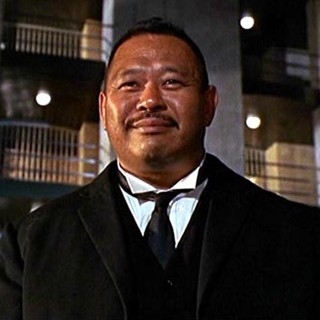
“You can’t play Oddjob,” I say. “He’s too short, it’s no fair.” But he wouldn’t listen, and I wouldn’t argue for very long. Looking back I can’t help but laugh at his straightforward humor. Oddjob was a little man, and that’s funny, so why not? I couldn’t deny Mando’s taste for the absurd, but all I could think about was the competition. “It’s not fair.”
No, it’s not. How desperately inadequate it seemed to me, when I heard the news of his death, that my memory of Mando automatically catalogued itself into a list of the games we played together: Goldeneye, Diddy Kong Racing, Zoombinis. It just seemed ridiculous. How could his diligent brilliance, his active occupation with questions of human suffering, be so reduced by anecdote? Am I so petty, so self-involved?
Of course not, I tell myself. Why should my memory of him, whatever its context, be any less valid others? We were just kids, after all. We played games. The question still scrapes at me, though: Why does one’s “gaming life” feel less potent, less real?
That’s what we’re told it is, at least. There’s no point indexing the vast social stigma that spells it out: we’re led to believe that time spent holding a controller is better spent elsewhere , almost without exception. Our memories and emotional experiences are somehow devalued, should they take place in virtual space.
Maybe it’s my guilt, but right now I find myself buying in to that silly idea, because to a certain extent I felt as though my love of gaming drove me and Mando apart. As we aged, he lost his taste for videogames, and our favorite pastime became a bothersome snag in our friendship. (We would eventually be split by distance, not taste.) I remember a birthday party, at Mando’s house. He and the larger portion of the party wanted to quit the TV and go outside – I wouldn’t be moved. My parents had limited my own gametime to an hour a day, so, selfishly, I saw the party as an opportunity to catch up on lost time. After a bitter little tiff the group split up, and I was left alone in the bedroom. I didn’t really want to play anymore. By then it was just a matter of principle.
What difference of principle did I imagine between the two of us? Was it really that Mando was beginning to outgrow games and that I should too, that “outgrowing” was something that was supposed to happen, that he was starting to “see the light” – maybe the light of his future potential, whatever light it was that burned in him so feverishly? It could be. It could be that games were too small for him – that, like our parents told us, he really did have better things to do.
I actually do think that’s the case – his spirit and wit were needed elsewhere, they were too broad and infectious for me and my meticulous habits. And while that was the best for him, and in spite of the bitterness and guilt I feel at having drifted apart from him, and gaming’s undeniable role in all of that – I still can’t help but believe that games are a language and not a vice. They’re a way of interacting with your friends, not a way to blow off social obligation. I wanted to stay inside because I enjoyed playing Goldeneye with Mando, not because I enjoyed playing videogames more than I enjoyed spending time with people.
I don’t think anyone here would contest that the connections forged by videogames are real. But Mando’s death has forced me to look closer at what it was that made those times playing Goldeneye special, worthwhile, and I think what it comes down to is nonverbal communication. I don’t mean just quietly playing a game together – I mean sharing that common reservoir of past experience that flows into play, the sustained buildup of your genre vocabulary, of your personal gaming lexicon. Familiarity with a variety of games allows one to interact with others, with strangers, in any number of wordless ways. As Mando and I grew comfortable with our games and each with other, we became capable of communicating with action: we both knew Goldeneye’s maps by heart, so the irregularities in our ever-repeating movement through them could be interpreted as subtle aggressions, playful invitations, calculated feints. “Play” is a language you learn to speak over time, with all the opportunities for poetry that “language” entails. More than that, there’s an undeniable solidarity between native speakers.
A silent dialogue takes place between two gamers, meeting for the first time. It’s a beautiful surprise, like overhearing your mother tongue in a foreign place. You start to probe at your shared heritage. A proffered controller serves as the polite greeting, an unspoken Sprechen Sie Smash Bros ? This salutation is returned in kind with the ceremonial shifting of Time to Stock, maybe even the formal conjugation of Not Playing Meta Knight. A dialogue begins.
There’s a tenderness to the ritual. Finding an unexpected, fundamental, and, in most cases, emotionally potent line of communication can expose a kind of rawness, and seeing that rawness reflected in the faces of strangers – it’s exhilarating. We (everyone, not just gamers) relate to one another with our common sum of joy. Love for a sports team, taste in music, fashion sense: banal as it can sometimes be, the language of mutual enjoyment is a thick and automatic bond. We love the people who love what we love.
The most touching of Mando’s tributes were those that celebrated him in that language of shared pleasure. New York Times reporter Aaron Edwards wrote an affectionate article that outlines Mando’s character in the terms of its colorful idiosyncrasy, its many little loves – the title, “ Cheeseburgers, Journalism and George Michael ” is only a sampling. Another “obsession,” Edwards writes, was the hashtag. “Everything in life deserved a hashtag for Mando.”
The language of Twitter does little for me, but for Edwards and Mando it was a specialized form of communication, an emotional shorthand. And that’s valuable. It’s funny; I never would have thought that hashtags would bring me joy – reading Edwards’ article, though, makes me feel ok about remembering Mando with videogames.
For all the languages you learn, the first few years are the most formative. Cadence, idiom, tone: it’s all picked up from the first voices you hear. You mouth the sounds, tongue their weight against your teeth, smooth their contours against the roof of your mouth until they become more than formless noise, more than letters on a bathroom stall, and suddenly you’re speaking words.
Mando was that first voice. His remarkable fluency, his natural and effortless grasp of the language of play, will always animate my own. I could never be ashamed of the time we spent playing videogames, because it armed me with the playful poetry I carry with me everywhere – it’s his bright speech I use when I meet another speaker, and we sit down to play.


Pingback: This week in Video Game Criticism: From political correctness to Spec Ops' cowardice | Video Game Sound Effects ()